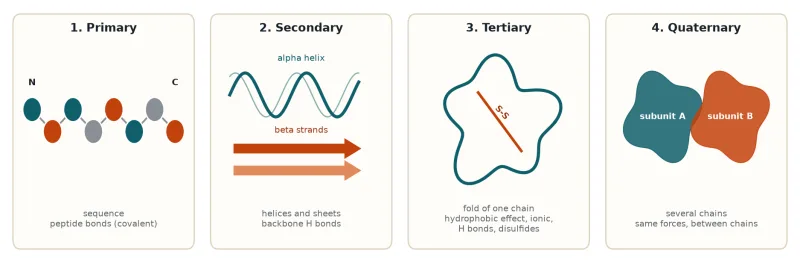
Fig. 0 · alpha helix · 3.6 residues per turn · i to i+4 H-bondsDenatured · same primary sequence, no secondary structure
MCAT 1A · Amino Acids, Proteins and Enzymes
Study less text. Recall more science.
StudyStore makes original, high-yield MCAT study packs. Each pack pairs a tight Anki deck with a printable cheat sheet, written from scratch and checked card by card.
Amino acid general structure and alpha carbonStereochemistry of amino acids (L and D, R and S)Side chain classes: nonpolar, aromatic, polar, acidic, basicOne- and three-letter codesSide chain pKa values and charge at physiological pHTitration curves and isoelectric pointHenderson-Hasselbalch applied to amino acidsSpecial residues: Gly, Pro, Cys, His, MetEssential versus nonessential amino acidsPeptide bond formation, resonance and hydrolysisDisulfide bonds and cystinePrimary structureSecondary structure: alpha helix and beta sheetTurns, loops, phi and psi anglesTertiary structure and stabilizing forcesQuaternary structure and subunitsHydrophobic effect and protein folding thermodynamicsChaperones, misfolding and prions
Fig. 1 · Enzyme kinetics, drawn as you scroll
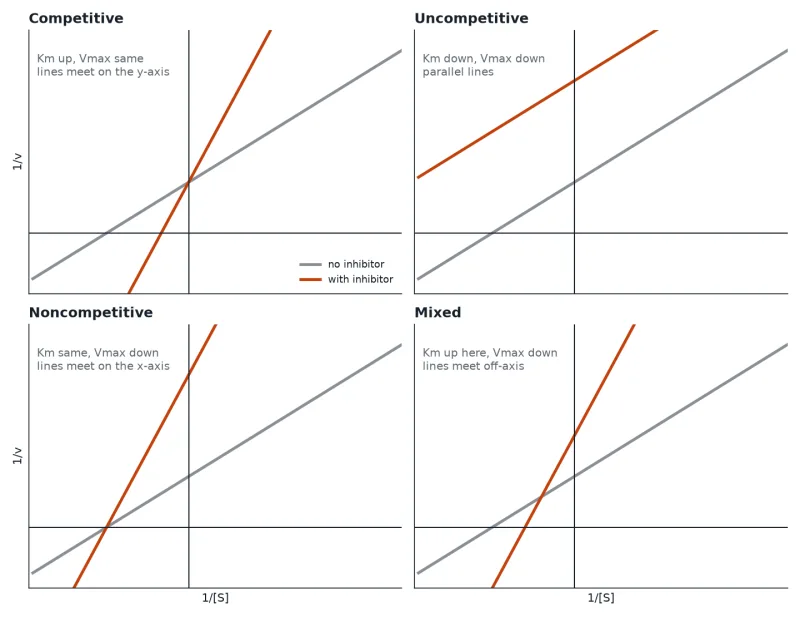
The inhibition table, in ten seconds of scrolling.
01
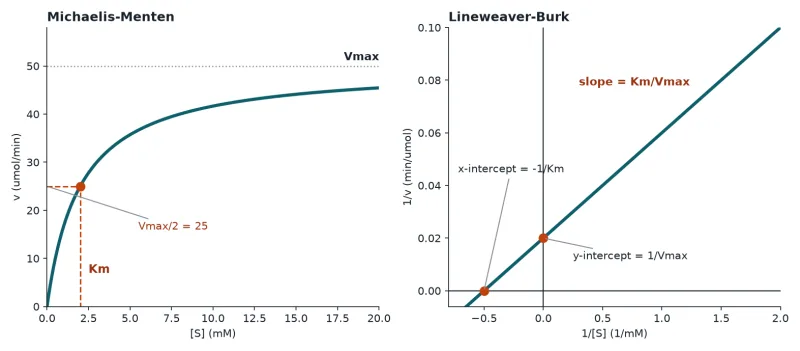
Michaelis-Menten
v = Vmax[S] / (Km + [S]). Velocity climbs, then flattens as every enzyme is saturated.
02
Read Km and Vmax
Km is the [S] at half of Vmax. Low Km means tight binding.
03
Competitive
Binds free enzyme at the active site. Apparent Km rises; Vmax unchanged. More substrate wins.
04
Noncompetitive
Binds E and ES equally. Vmax falls; Km unchanged.
05
Uncompetitive
Binds only ES. Km and Vmax both fall, so Lineweaver-Burk lines run parallel.
Fig. 1. No inhibitor.no inhibitor with inhibitor
Try it · 3 sample questions
Do not take our word for it. Take the quiz.
3 real practice questions from the 1A pack, word for word. Pick an answer to see the explanation that ships with it.
0 of 3 answered
Q1What is the approximate net charge of the tripeptide Lys-Asp-Gly at pH 7.4?
B. At pH 7.4 the free N-terminal amine is +1, the Lys side chain is +1, the Asp side chain is -1, and the free C-terminal carboxylate is -1, for a net charge of 0. Answering +1 or +2 forgets one or both negative groups, and -1 forgets the N-terminus.
Q2Why does the peptide bond not rotate freely?
D. Delocalization of the nitrogen lone pair onto oxygen makes the amide plane rigid. A hydrogen bond, ionic bond, or disulfide would be a different type of interaction and would not describe the amide linkage.
Q3An enzyme transfers an amino group from one molecule to another. Which EC class?
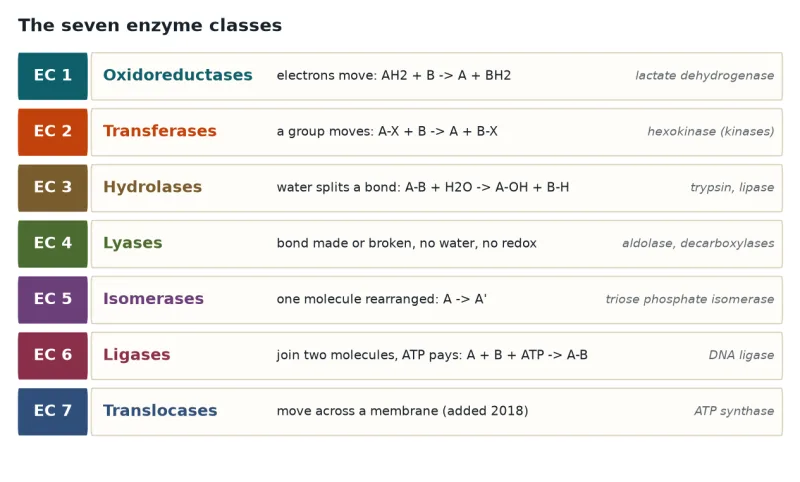
A. Group transfer defines EC 2 (transferases), as with aminotransferases. Ligases join molecules using ATP, lyases cleave without water or redox, and isomerases rearrange one molecule.
That was 3 questions. This pack has 53, plus 423 flashcards.
Download, double-click, study. The deck imports in about 30 seconds and re-importing updates the same notes instead of duplicating them.
deck.apkg423 original Anki flashcards (233 short answer, 72 multiple choice, 61 cloze, 52 true/false, 5 image occlusion), 23 original diagrams
guide.pdf11-page illustrated study guide that explains the ideas
cheatsheet.pdf3 printable pages, US Letter at 100 percent
questions.pdf53 original MCAT-style practice questions with explanations, including 4 passage-based sets
README.txtimport steps
Card types, chosen per fact
233 short answer
72 multiple choice
61 cloze
52 true/false
5 image occlusion
deck.apkgDefine Km.
cheatsheet.pdf
README.txt1. Install Anki2. Open deck.apkg3. Study
MCAT 1A$19
Fig. 3 · The cheat sheet
Three pages. The whole category.
The Amino Acids, Proteins and Enzymes cheat sheet puts the tables, plots and numbers from the whole category on 3 pages. Dense, but built to be read at 100 percent on US Letter. Shown here as a partial preview.
Hover the page to zoom in. On a phone, tap.
cheatsheet.pdf, page 1 of 3 (partial preview)
Packs and pricing
One price per pack. No subscription.
MCAT 1ABio/Biochem
Amino Acids, Proteins and Enzymes
$19instant download
423-card Anki deck with 23 original diagrams
11-page illustrated study guide (PDF)
3-page printable cheat sheet (PDF)
53 MCAT-style practice questions with explanations
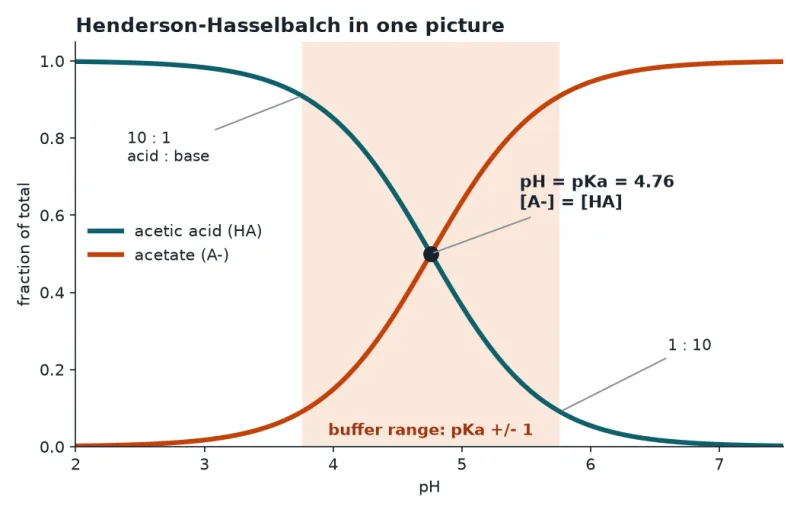
Derive the Henderson-Hasselbalch equation, then use it for buffers, the bicarbonate system in blood, amino acids, and drug ionization, with worked examples.
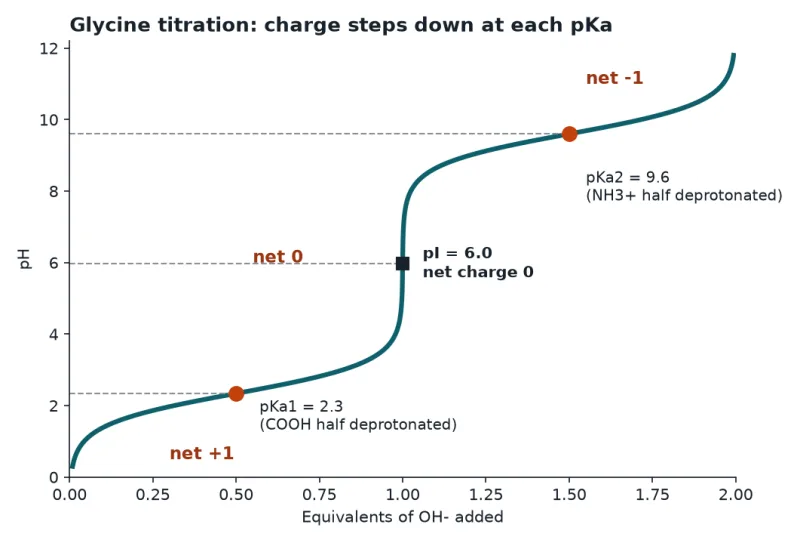
How to predict the charge, pI, and titration behavior of any amino acid for the MCAT, with the side chain pKa values worth memorizing.
FAQ
Questions, answered tersely.
How do I import the deck into Anki?
Install Anki (free, from apps.ankiweb.net). Unzip your download, then double-click deck.apkg or choose File, Import. Cards are tagged under StudyStore::MCAT, and re-importing updates the same notes instead of duplicating them.
What is inside a pack?
Each pack covers one MCAT content category: an original Anki deck, an illustrated study guide PDF, a printable cheat sheet PDF, original practice questions with explanations, and a short README. The 1A pack, for example, has 423 flashcards and 53 questions. See every pack.
Do I need to use Anki?
The cheat sheet works on its own as a PDF. The deck needs Anki, which is free on desktop and Android.
What if it is not for me?
Every pack has a 14-day, no-questions-asked refund. See the refund policy.
Who handles payment?
Lemon Squeezy is our merchant of record. It processes your payment and sales tax and delivers the download. This site collects no personal data.
Is this affiliated with the AAMC?
No. StudyStore is independent. MCAT is a registered trademark of the Association of American Medical Colleges (AAMC), which is not affiliated with and does not endorse StudyStore.